Advertising

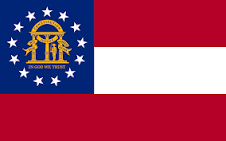
Georgia Flag detail

Map of Georgia (GA)

For a map of Georgia, a country in the Caucasus, go to Map of Georgia


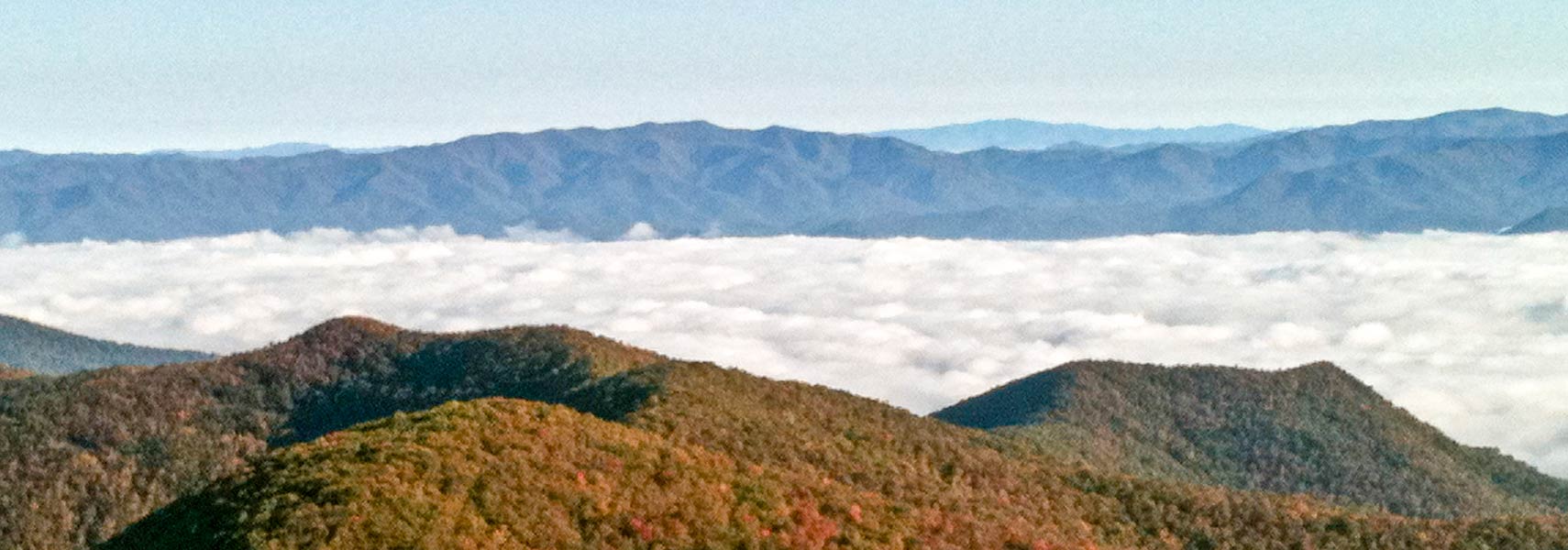
Chattahoochee National Forest, view from Brasstown Bald Mountain
Early morning views from Brasstown Bald looking north, Chattahoochee National Forest, Georgia. Brasstown Bald is the highest point in the state at 1,458 m (4,784-ft).
Image: Julia Schrader

 
Georgia US Flag
Georgia State Flag
 

Georgia Quick Facts (2026)

State Capital Atlanta
Population 11.3 Million (2026 Est.)
Highest Point Brasstown Bald (1,458 m / 4,784 ft)
Largest City Atlanta (Metro: 6.4 Million)
Global Gateway Hartsfield-Jackson Int'l (ATL) & Port of Savannah
Time Zone Eastern Time (UTC -5/-4)

About Georgia, USA

Georgia is one of the 50 US states situated in the southeastern mainland of the United States. Not to be confused with Georgia, a country in southwestern Asia, and formerly part of the Soviet empire.


US Georgia borders the Atlantic Ocean in the southeast, and it shares state lines with Tennessee and North Carolina in the north. The Chattahoochee River defines a section of Georgia's border with Alabama in the southwest and a short length of its border with Florida. The Savannah River forms a natural border with South Carolina in the east.


The state's nickname is "Peach State," and it is also known as the "Yankee-land of the South."


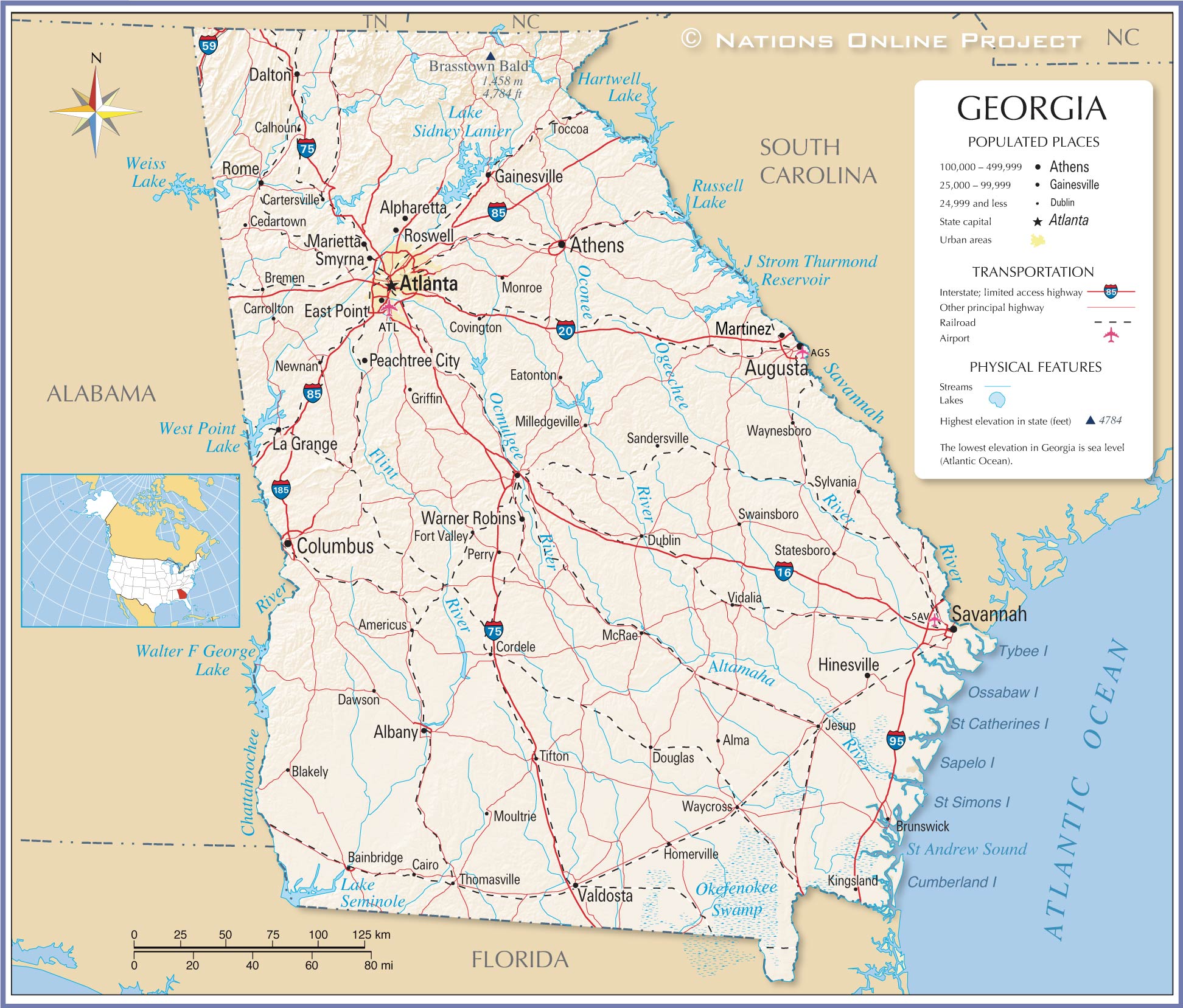
Georgia State Map


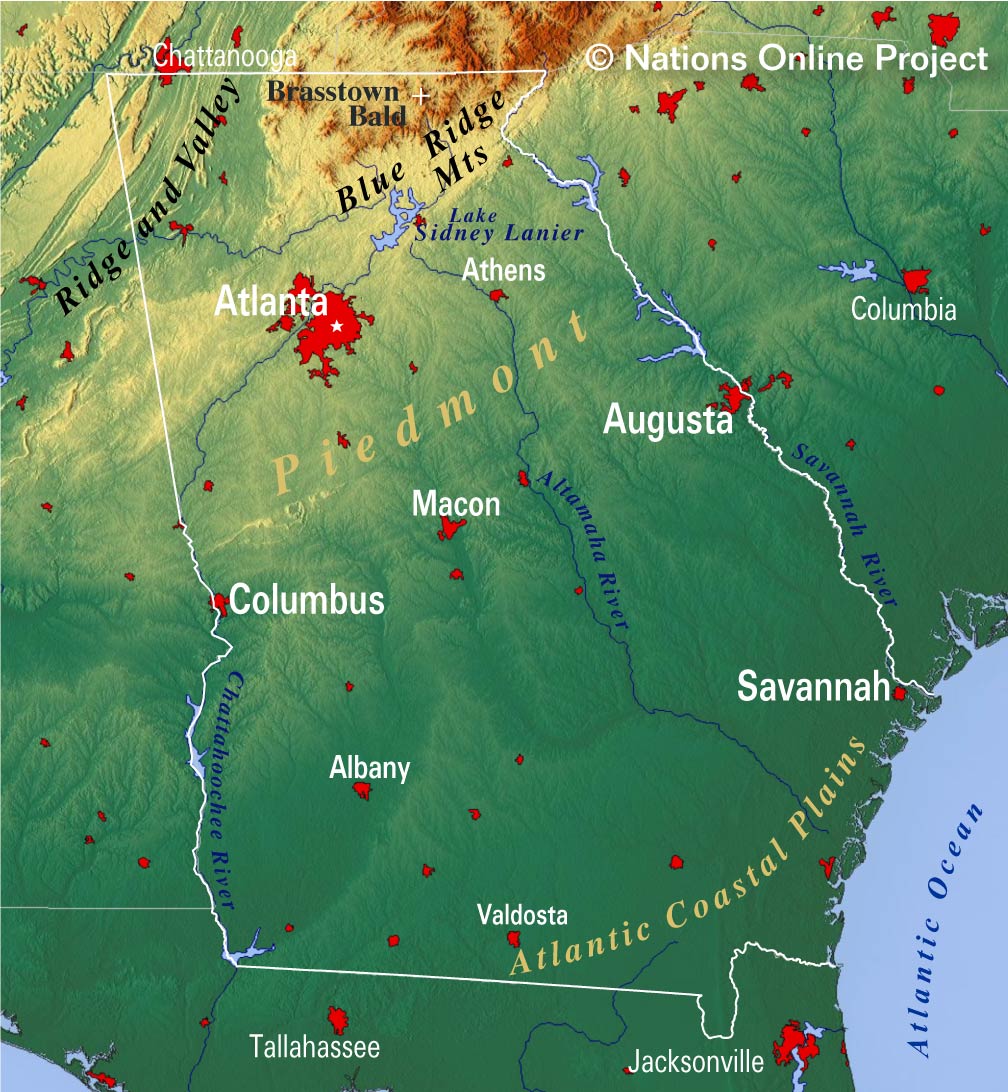
Reference Map of the US state of Georgia
General Map of Georgia, United States.

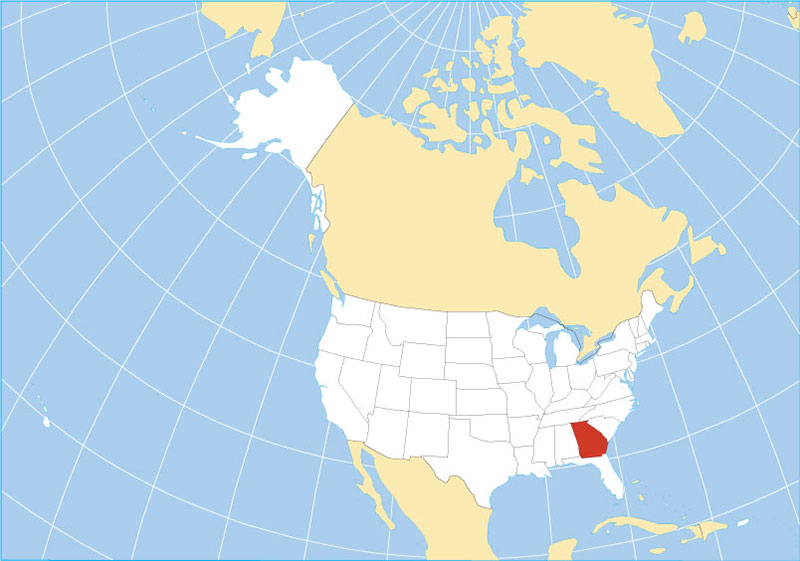
Location map of Georgia state USA
Where in the United States is Georgia? Location map of Georgia in the US.
 
The detailed map shows the US state of Georgia with state boundaries, the location of the capital Atlanta, major cities and populated places, rivers and lakes, interstate highways, principal highways, railroads and major airports.


You are free to use the above map for educational and similar purposes; if you publish it online or in print, you need to credit Nations Online Project as the source.


More about the state of Georgia


Founded as an English colony in 1732 and named after King George II of Great Britain, it was one of the original thirteen states. Statehood since 2 January 1788, it was the fourth of the original 13 states to join the Union.

 
Georgia Topographic Regions Map Topographic Regions Map of Georgia.
 

Area

With an area of 153,909 km² (59,425 sq mi), [1] the US state of Georgia is about half the size of Italy. Compared with other US states, Georgia would fit into California six times.


Climate and Biomes

Georgia has a humid subtropical climate with four seasons: long, hot summers, mild winters and the corresponding transition periods of spring and fall. The climate supports diverse biomes, such as a temperate rainforest (broadleaf and mixed forests) in the high Blue Ridge Mountains, salt marshes and maritime forests of the Golden Isles, the four barrier islands, St. Simons Island, Sea Island, Little St. Simons Island, and Jekyll Island along the Atlantic coast.
Golden Isles website: goldenisles.com


Georgia's Geography


Five different major regions define Georgia's landscape (from north to south):
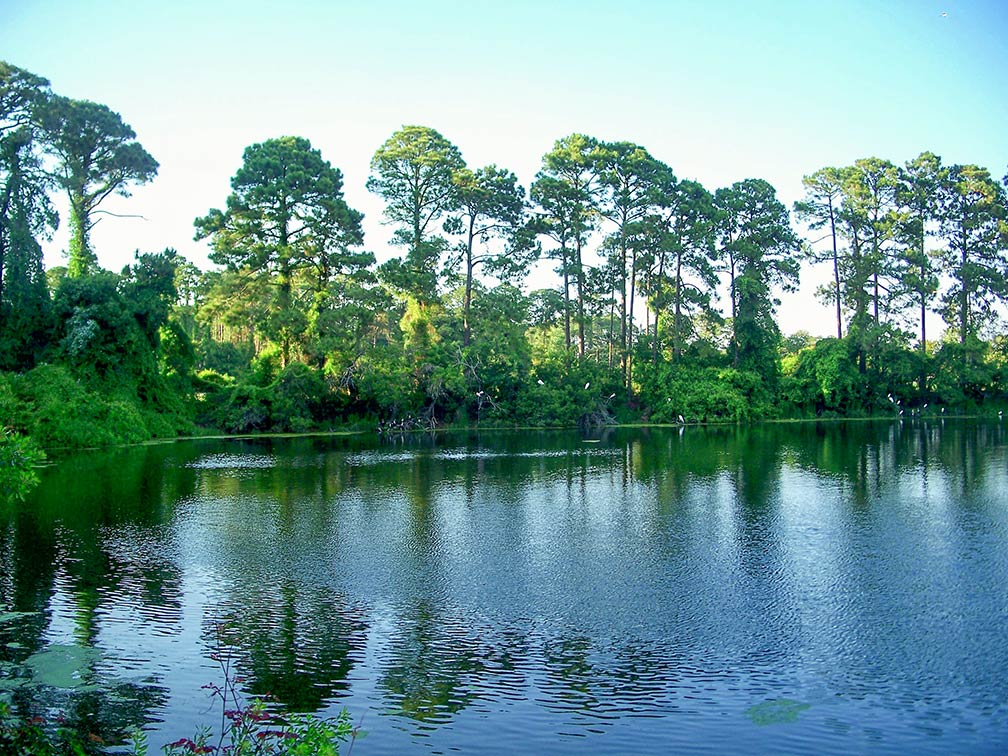

Pond and great egrets, bird rookery on Jekyll Island, Georgia
Pond with great egrets in the background. A bird rookery on Jekyll Island, one of the four barrier islands in Glynn County, Georgia.
Image: mwms1916

 
1. In the northwestern corner is the Valley and Ridge region, a zone of alternating mountain ridges and valleys in Georgia's portion of the Appalachian Plateau.


2. In the northeastern corner is the southern end of the Blue Ridge Mountains, a subrange of the much larger Appalachian Mountain Chain. Situated there is the highest elevation in the state of Georgia, Brasstown Bald (Enotah) at 1,458 m (4,784 ft).


3. The hilly Piedmont part of the state is Georgia's most populated area. Within the region are the fall line cities of Augusta, Macon, and Columbus.

The fall line is the natural border between the lower coastal plain and the higher terrain of the Piedmont. Before the improvement of navigational facilities such as locks, the fall line was usually the head of navigation on rivers due to insurmountable rapids or waterfalls.

Fall line cities developed at the end of the navigable part of a river, where boats could go no further. Trading posts were established in those places, where materials brought from the coastal plains could be traded for goods from the Piedmont.
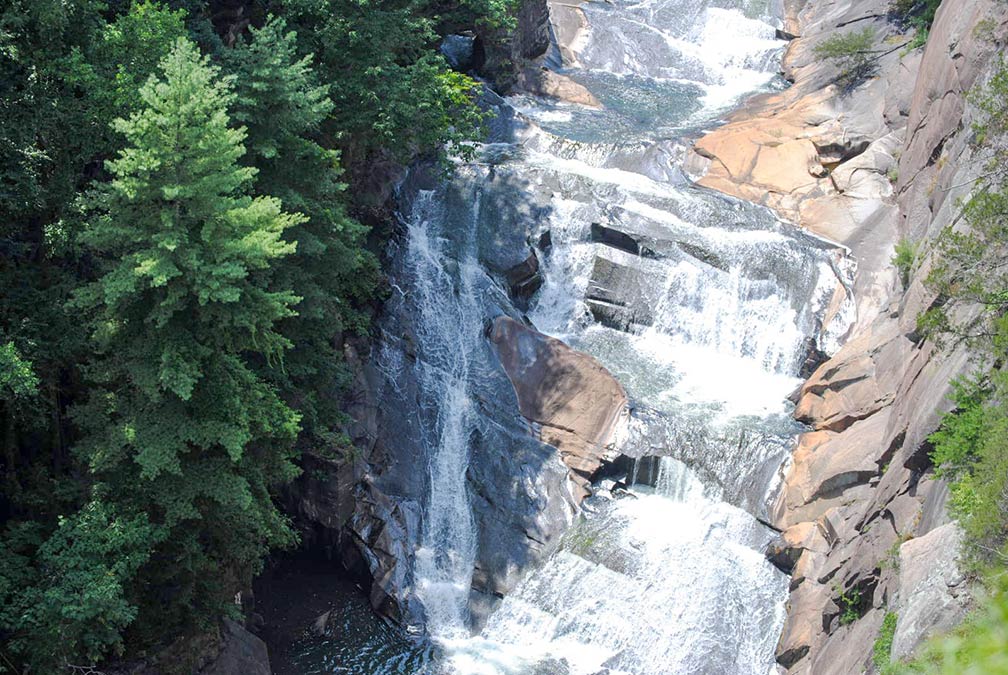

Tallulah Falls in Tallulah Gorge State Park
Tallulah Falls of the Tallulah River at Tallulah Gorge State Park, about 155 km (96 mi) northeast of Atlanta.
Image: chronic-shock

 
4. The relatively flat Coastal Plain is Georgia’s largest geographical region, it covers about 60% of the state, expanding from the Atlantic Ocean to the Fall Line.

In prehistoric times, this area was a seabed, and the coast was near the fall line. When the ocean retreated, it left a vast expanse of limestone, clay, sand, and other 'soft' sedimentary deposits. The land is usually poorly drained, and there are often marshy areas. The Okefenokee Swamp in southwest Georgia and northern Florida is a 1,770 km², peat-filled wetland, considered to be one of the Seven Natural Wonders of Georgia. The Suwanee River rises in the Okefenokee Swamp.


Rivers

Other major rivers in Georgia are the Savannah River, the Chattahoochee River, which forms part of the border with Alabama, and the Altamaha River, fed by the Oconee and Ocmulgee rivers.


Lakes

Major lakes in Georgia are Lake Sidney Lanier, a reservoir at the Chattahoochee River; Lake Seminole, a reservoir located in the southwest corner of Georgia; and West Point Lake, a reservoir at the Chattahoochee River.
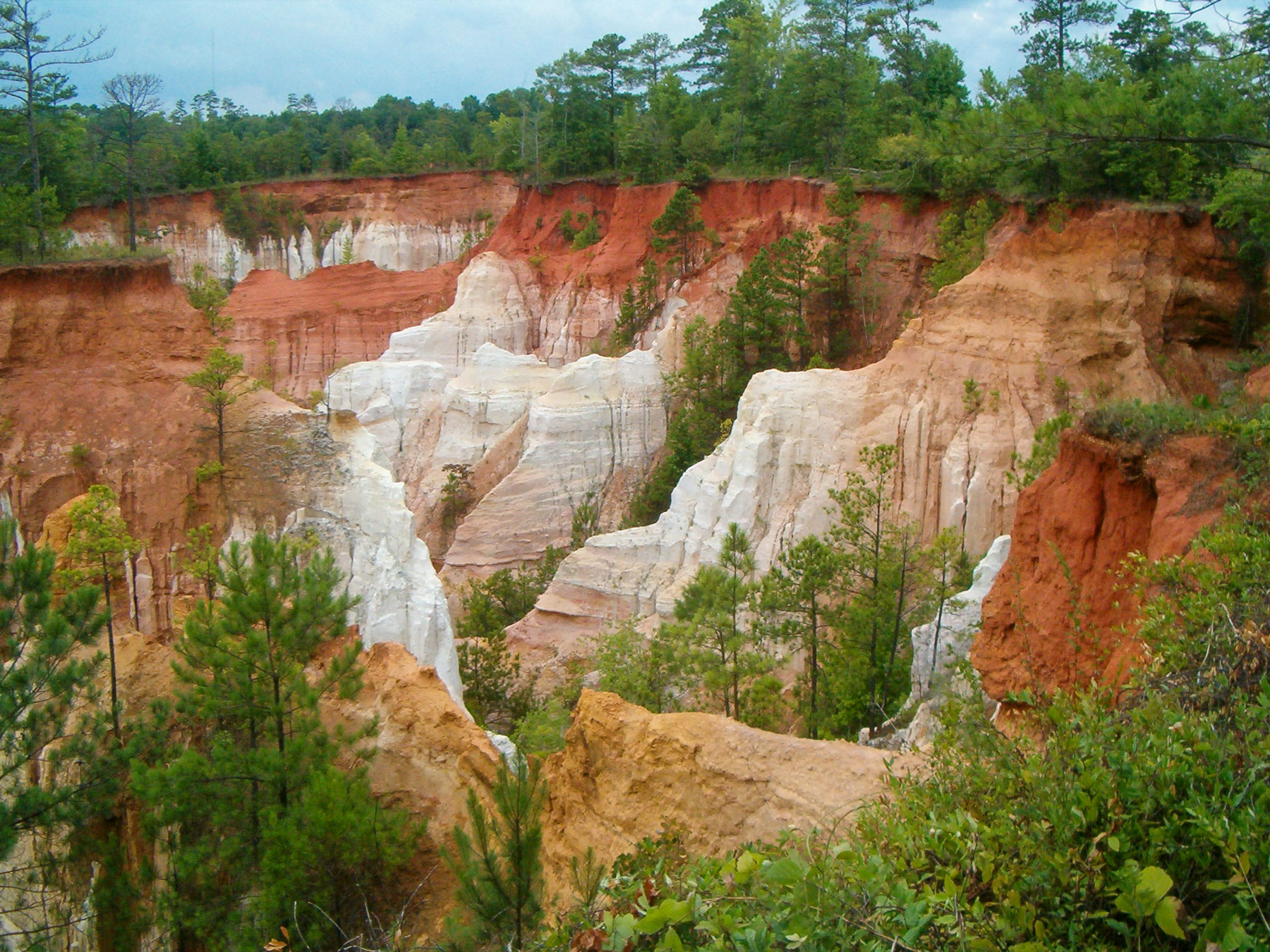


Georgia's "Little Grand Canyon"
View of a portion of Providence Canyon State Park, also called Georgia's "Little Grand Canyon"
Image: Robbie Honerkamp


Georgia's "Seven Natural Wonders"


  • Amicalola Falls: The highest waterfall in Georgia.

  • Okefenokee Swamp: One of the world's largest intact freshwater ecosystems.

  • Providence Canyon: "Georgia's Little Grand Canyon," showcasing colorful geological strata.

  • Radium Springs: One of the largest natural springs in the state.

  • Stone Mountain
    The Stone Mountain is a massive isolated dome of quartz monzonite.

  • Tallulah Gorge
    The Tallulah Gorge is a spectacular canyon formed by the Tallulah River.

  • Warm Springs
    Warm Springs is famed for its mineral waters and as the Franklin D. Roosevelt's "Little White House."




Population (2026 Estimates)


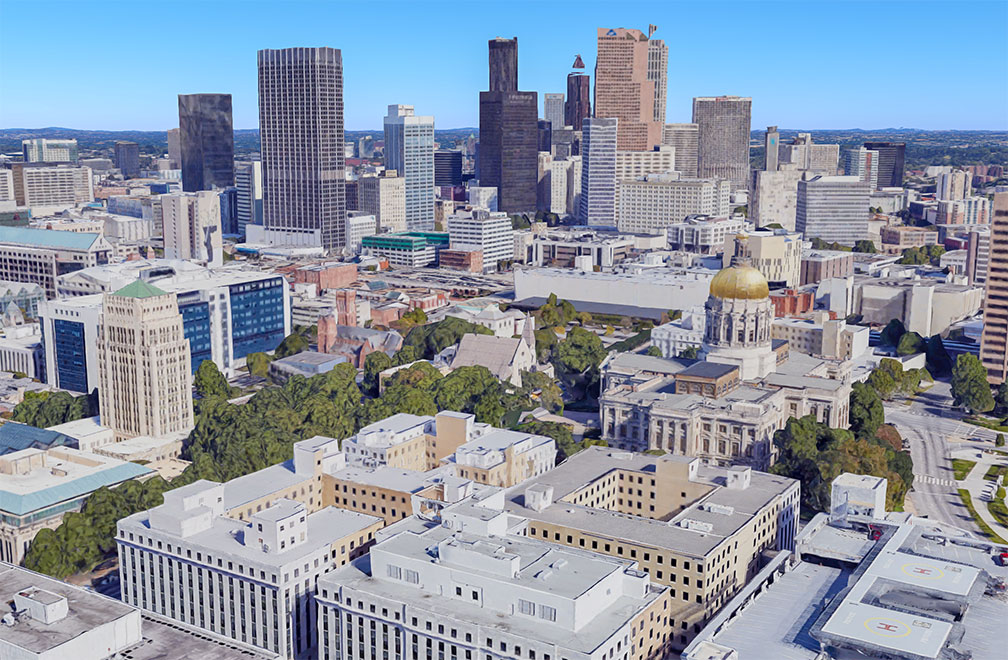
Georgia State Capitol in Atlanta
The Neo-classical Georgia State Capitol in Atlanta, the primary seat of the state government.
Image: Google

Georgia has an estimated population of 11.3 million people (in 2026). It remains one of the fastest-growing states in the U.S. Georgia is notable for having the third-largest African-American population in the country (approximately 33%).

The state capital and primary economic hub is Atlanta. The Atlanta-Sandy Springs-Alpharetta metropolitan area (Metro Atlanta) now houses more than 6.4 million inhabitants, accounting for over half of the state's total population.


Race and Ethnic Groups (Estimated)


The demographic profile of Georgia is approximately: White (Non-Hispanic) 50.2%, African American 33.1%, Hispanic or Latino 10.8%, Asian 4.9%, and Native American/Other 1.0%.


Transport and Logistics


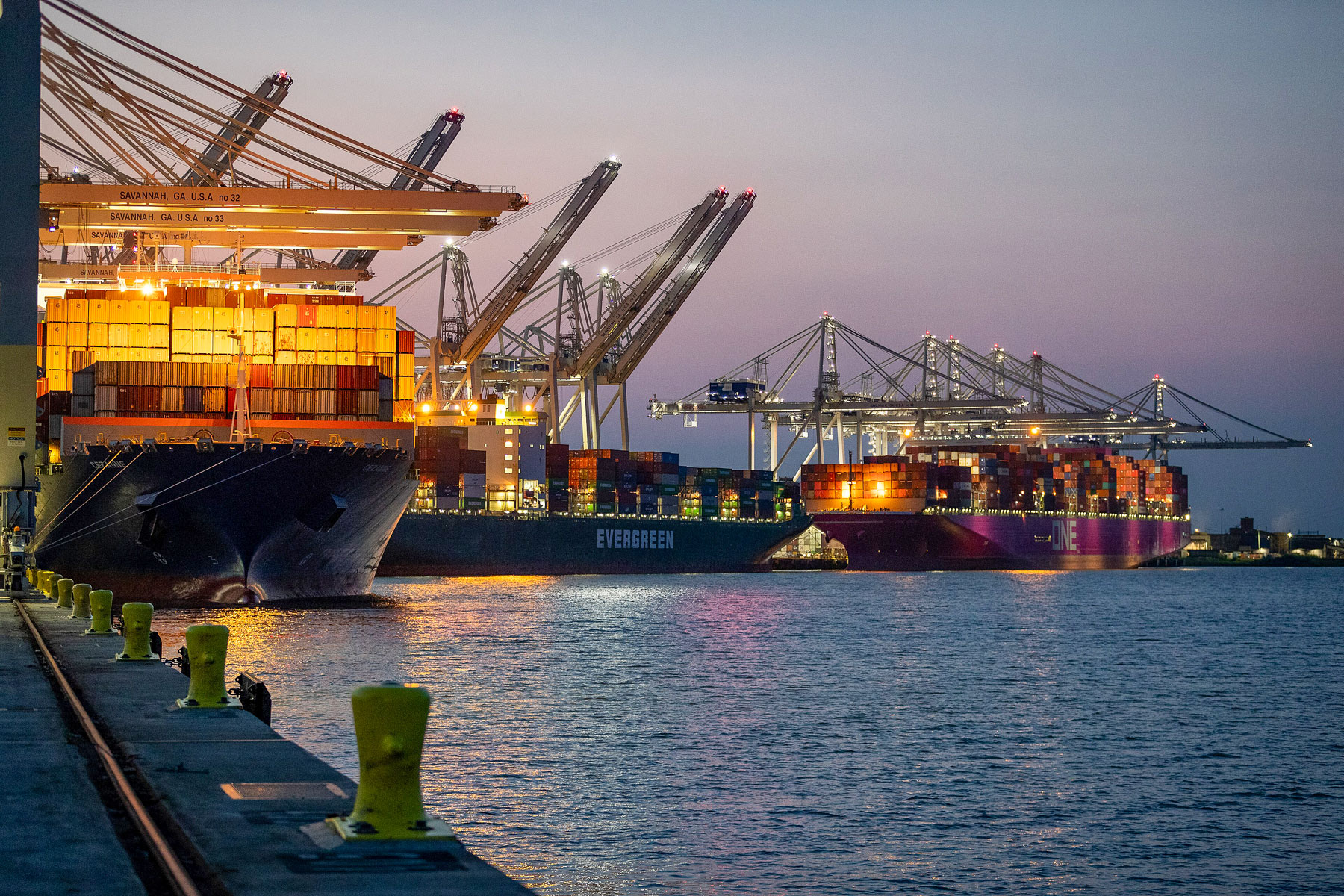
Containers ships docked at the Port of Savannah at dusk
Containers ships docked at the Port of Savannah at dusk.
Image: CBP Photography, Jerry Glaser

 
Georgia serves as the primary logistics hub for the Southeastern United States.

Airport

The state's chief aviation gateway is Hartsfield-Jackson Atlanta International Airport (IATA code: ATL). The facility consistently ranks as the world's busiest airport by passenger traffic and serves as a principal hub for global travel.

Website: www.atl.com

Port
The Port of Savannah is the fastest-growing container port in North America and claims to be: "The single largest container terminal in America. ". The port links the industrial heartland of the US to markets in Europe and Asia.

Website: gaports.com

Cities and Towns in Georgia


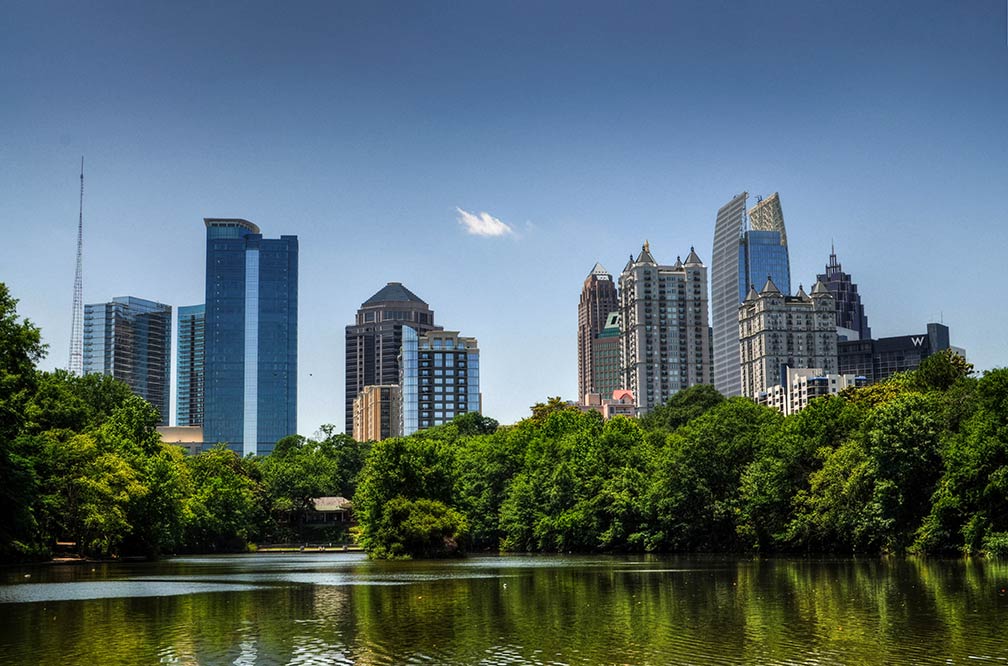
Atlanta Midtown seen from Piedmont Park
Atlanta Midtown viewed from Piedmont Park. Atlanta is Georgia's capital and most populous city.
Image: Mike

 
The map shows the location of following cities and towns in Georgia:

Largest cities are Atlanta (~500,000), Augusta (second largest city in Georgia, ~202,000), Columbus (~204,000), Savannah (~149,500), and Athens (~129,400).

Other cities and towns in Georgia

Albany, Alma, Alpharetta, Americus, Bainbridge, Blakely, Bremen, Brunswick, Cairo, Calhoun, Carrollton, Cartersville, Cedartown, Cordele, Covington, Dalton, Dawson, Douglas, Dublin, East Point, Eatonton, Fort Valley, Gainesville, Griffin, Hinesville, Homerville, Jesup, Kingsland, La Grange, Macon, Marietta, Martinez, McRae, Milledgeville, Monroe, Moultrie, Newnan, Peachtree City, Perry, Rome, Roswell, Sandersville, Smyrna, Statesboro, Swainsboro, Sylvania, Thomasville, Tifton, Toccoa, Valdosta, Vidalia, Warner Robins, Waycross, and Waynesboro.


Weather Conditions Atlanta:

ATLANTA WEATHER


Advertisements:


Maps of the 50 U.S. States
Alabama | Alaska | Arizona | Arkansas | California | Colorado | Connecticut | Delaware | Florida | Georgia | Hawaii | Idaho | Illinois | Indiana | Iowa | Kansas | Kentucky | Louisiana | Maine | Maryland | Massachusetts | Michigan | Minnesota | Mississippi | Missouri | Montana | Nebraska | Nevada | New Hampshire | New Jersey | New Mexico | New York | North Carolina | North DakotaOhio | Oklahoma | Oregon | Pennsylvania | Rhode Island | South Carolina | South Dakota | Tennessee | Texas | Utah | Vermont | Virginia | Washington | West Virginia | Wisconsin | Wyoming