More about Albania
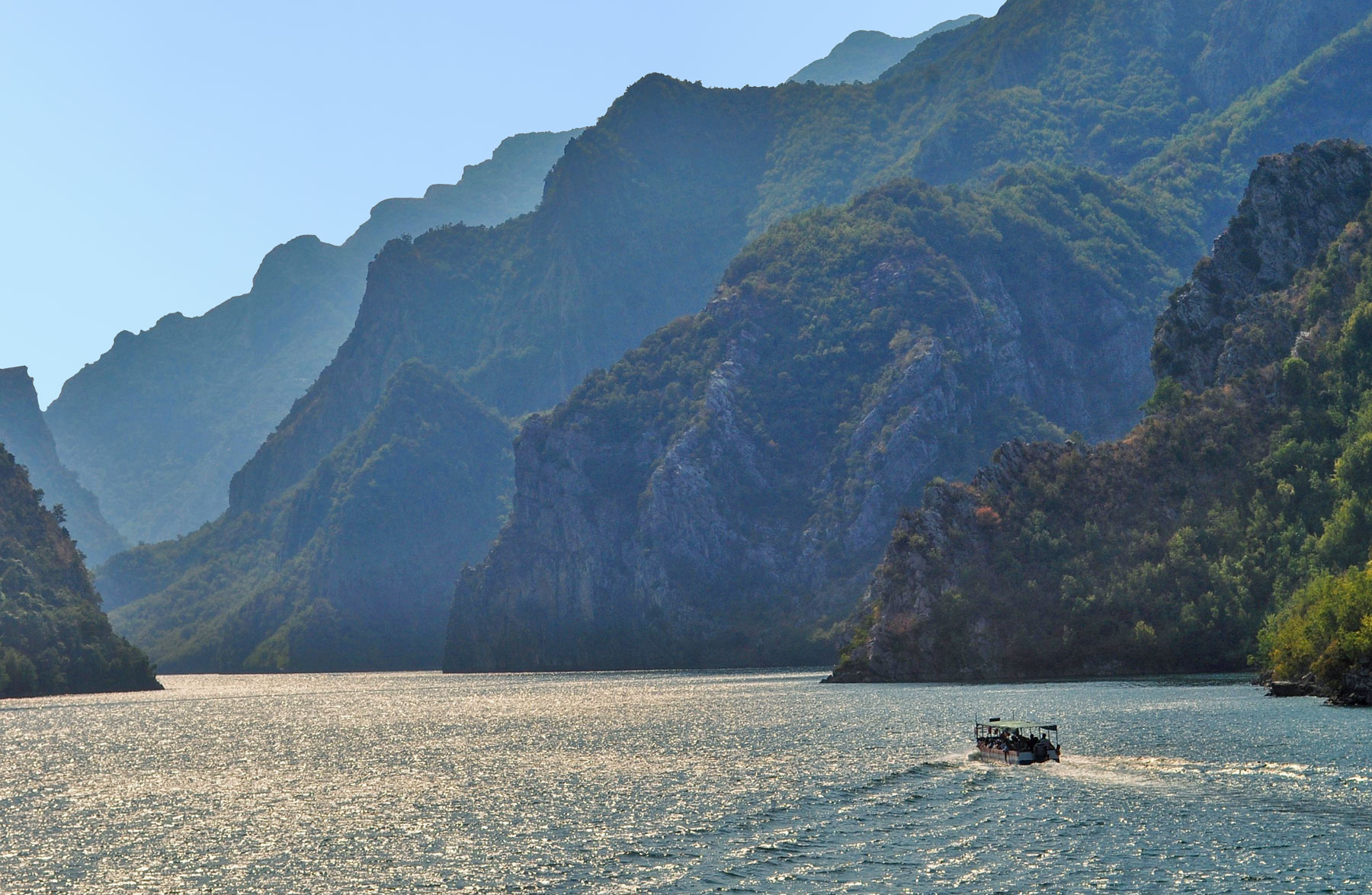 A ferry boat on Lake Koman in northern Albania, a reservoir of the Drin River that creates Albania's "fjord-like" landscape.
Photo: young shanahan
Geography of Albania
Albania is a nation on the southwestern
Balkan Peninsula with a coastline along the
Adriatic and
Ionian Seas, which are part of the
Mediterranean Sea.
Albania has three primary topographical areas: a coastal plain, an interior mountainous region, and interior plains. The interior of the country is mostly mountainous, and more than one-third of the country is densely forested.
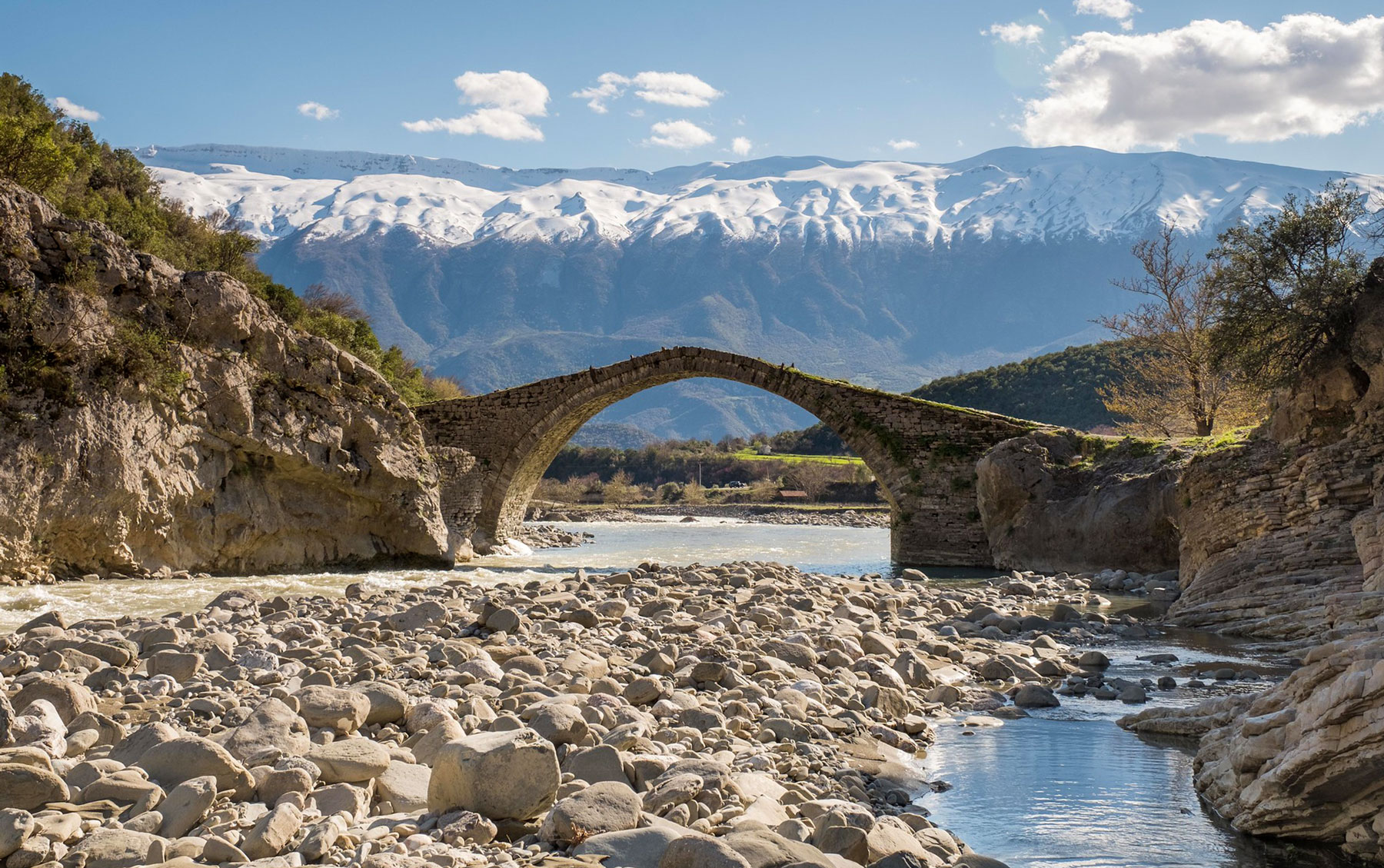
Rugged mountains like the
Albanian Alps, the
Korab Range,
Skanderbeg Mountains, the
Pindus mountain range, and the
Ceraunian Mountains dominate the landscape in the interior. Approximately 70% to 75% of Albania's territory is covered by rugged hills and mountains.
The highest mountain in the country is
Mount Korab at 2,764 m (9,068 ft); its ridges form part of the border between Albania and North Macedonia.
The Albanian plains are extensively planted with olives, citrus fruits, and vineyards.
There are numerous lakes in the country; the biggest is
Lake Shkodra, with an area of 370 km², the largest lake on the Balkan Peninsula, shared with Montenegro.
The exceptionally deep
Lake Ohrid (294 m; 931 ft) in the eastern part of the country is shared with North Macedonia.
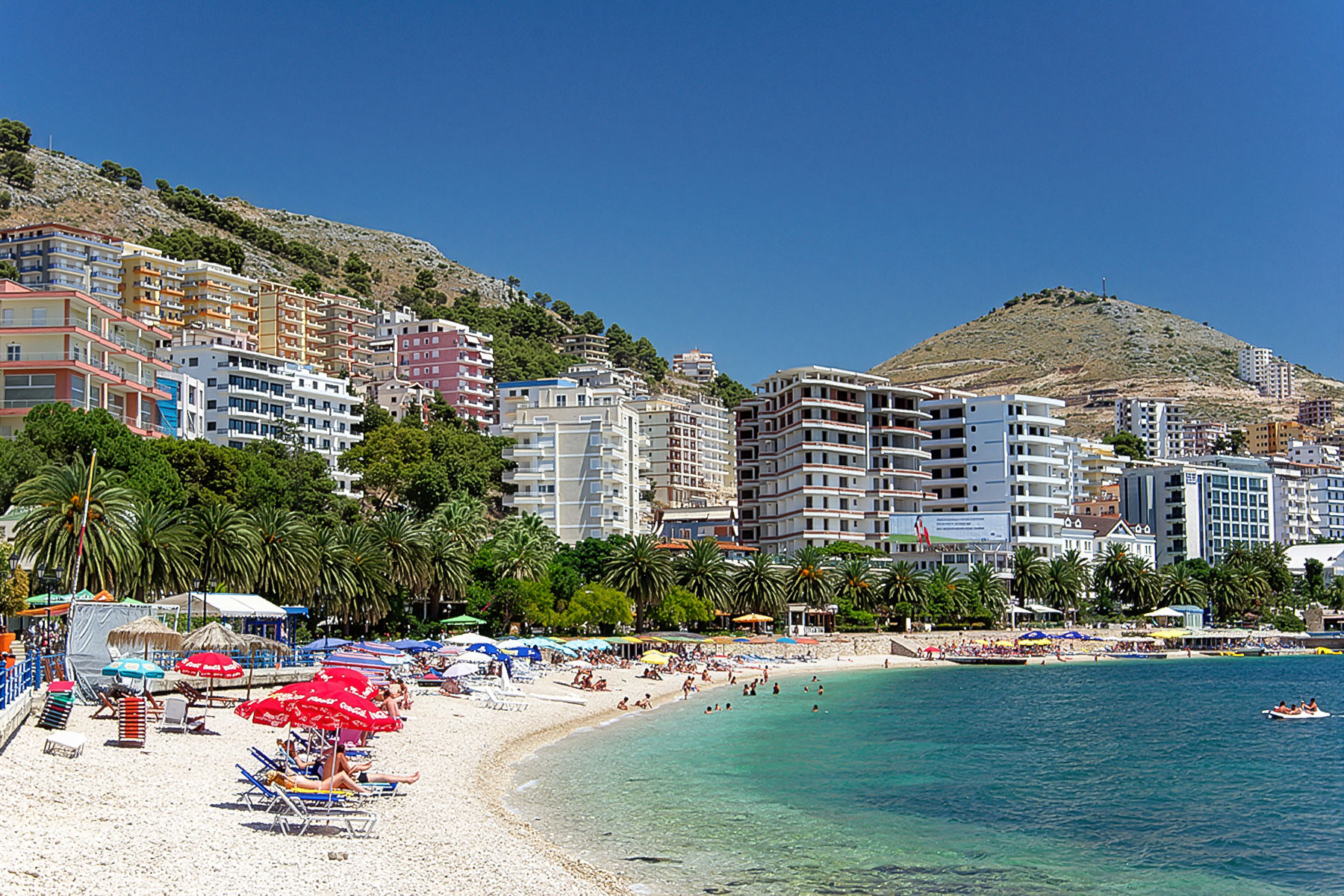 Sarandë is located in southern Albania on the Ionian Sea and is an important, rapidly developing tourist town and the unofficial capital of the Albanian Riviera.
Photo: Artur Malinowski
Sarandë is located in southern Albania on the Ionian Sea and is an important, rapidly developing tourist town and the unofficial capital of the Albanian Riviera.
Photo: Artur Malinowski
The Ionian coast, particularly the "
Albanian Riviera" from Vlorë to Sarandë, features some of the most picturesque scenery in the country.
History
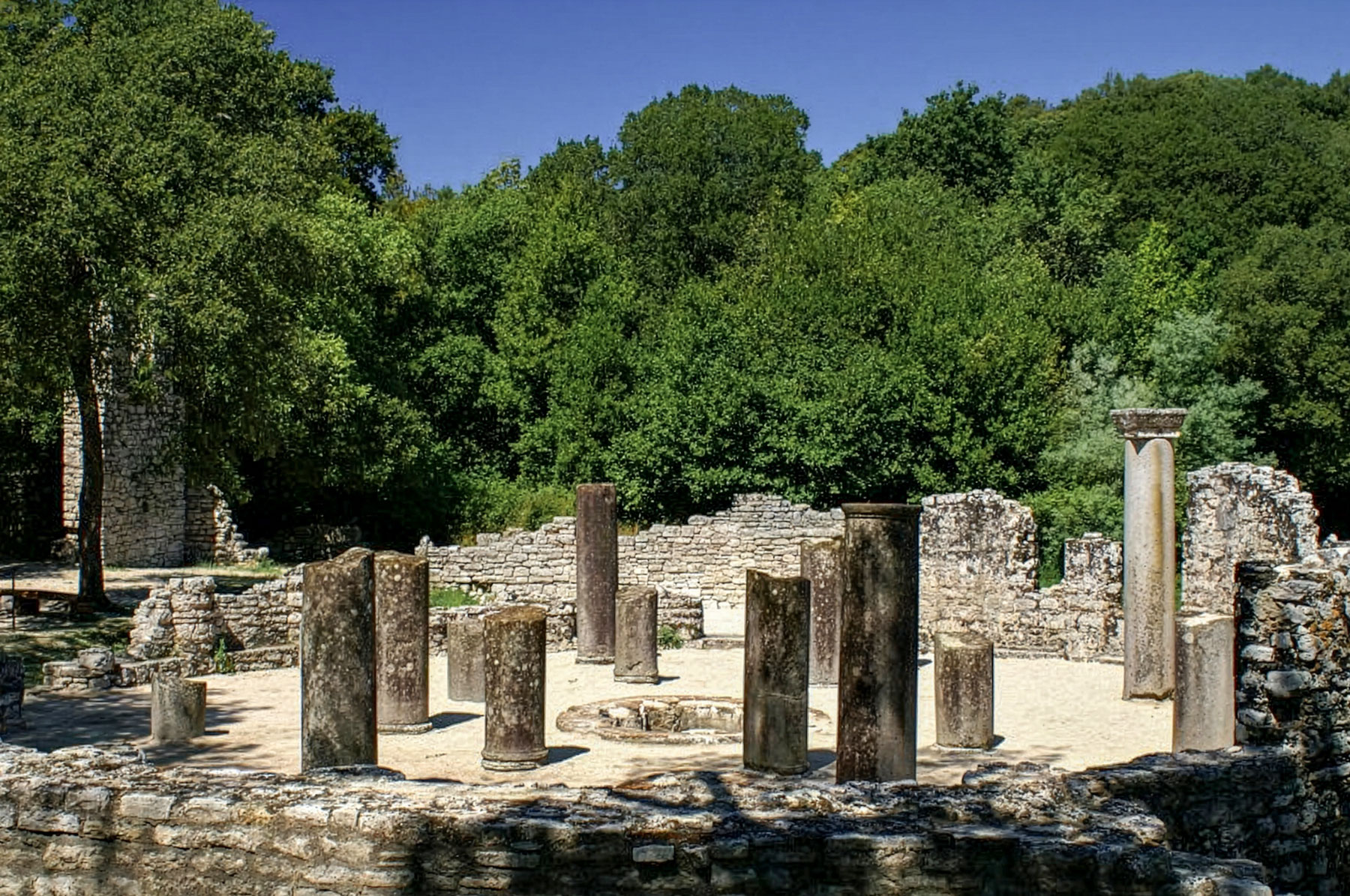
Albania's rich history has been influenced by ancient
Greek,
Roman, and
Ottoman empires. The country experienced periods of communism before eventually becoming a democratic republic.
Known for its traditional culture, including the concept of "besa" (keeping one's promise), Albania offers a unique blend of natural beauty and cultural heritage.
Climate
Albania has a predominantly Mediterranean climate, with hot, dry summers along the coast and mild, wetter winters. Inland and in the mountain regions, the climate becomes more continental, bringing colder winters, heavier snowfall, and larger temperature contrasts.
Airport
Tirana International Airport Nënë Tereza ((Mother Theresa) -
IATA code: TIA), also known as Rinas Airport, is Albania's only international airport. It is located 25 kilometres (16 miles) northwest of Tirana near the town of Rinas.
Seaport
The principal port is located in Albania's second-largest city of Durrës.
Counties of Albania
Albania's first-level administrative subdivisions are twelve counties, also called prefectures.
From north to south:
Shkodër
Capital: Shkodër
Shkodër, situated in the northwest of the country, is known as the northern gateway to the Albanian Alps. Famous for its rivers,
Rozafa Castle, and
Lake Shkodër, the county has played a historical role as a bridge between the Balkan hinterland and the Adriatic world.
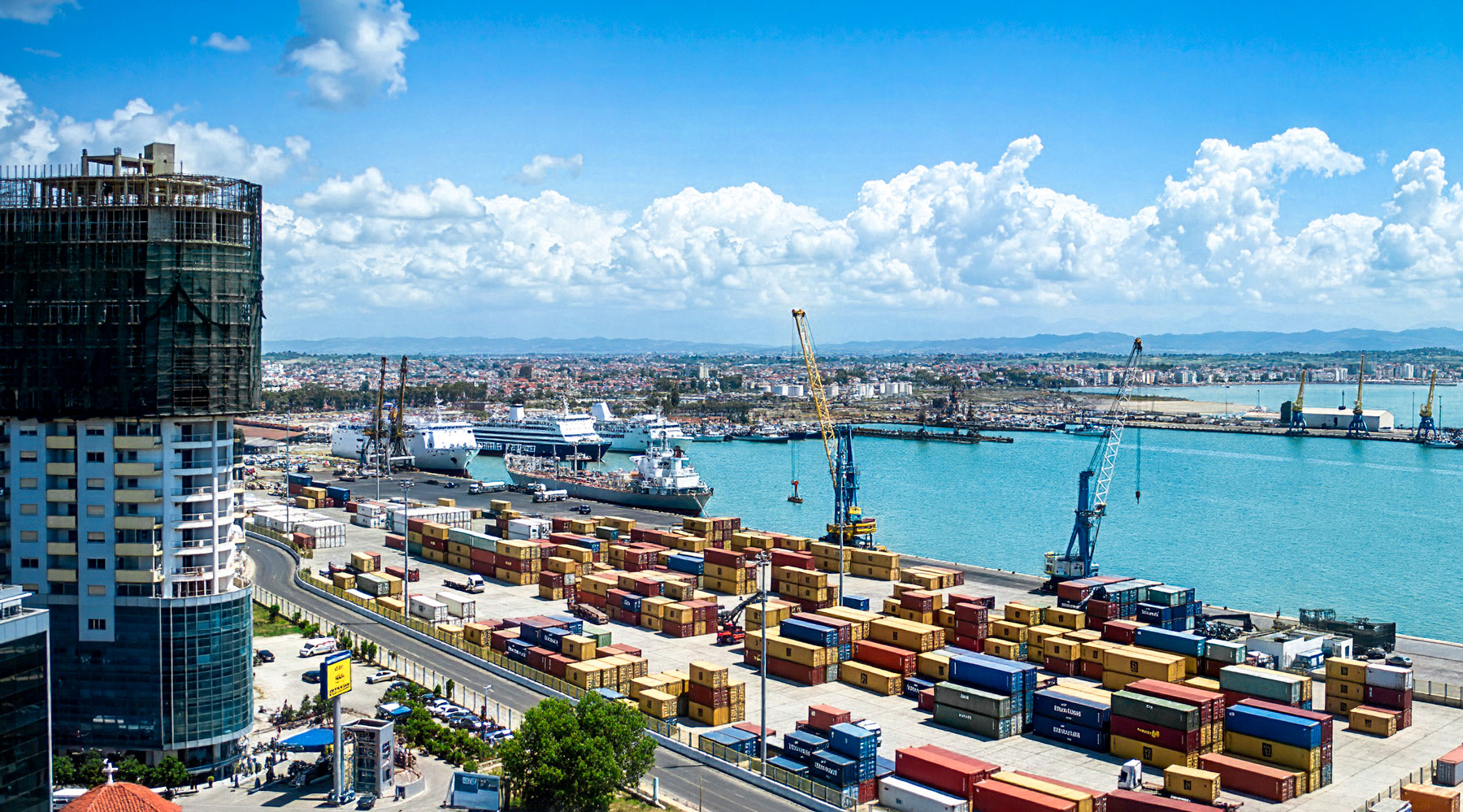 The port facilities in Durrës city, Albania's main port and a key gateway for trade and passenger traffic.
Photo: Matthias Krüttgen
Capital: Kukës
Located in the northeast of Albania, Kukës County is remote and mountainous. It is dominated by the
Drin River and a chain of hydropower lakes, is sparsely populated, and preserves strong highland traditions.
Lezhë
Capital: Lezhë
A coastal lowland county with fertile plains, Lezhë is historically significant as the place where
Skanderbeg's League was founded in 1444. The
League of Lezhë is often regarded as the first organized attempt at a unified Albanian state.
Dibër
Capital: Peshkopi
Dibër lies in the eastern highlands along the border with North Macedonia. It is known for its mountain scenery, thermal springs, and pastoral landscapes.
Durrës
Capital: Durrës
Durrës County is home to Albania's main seaport and one of its oldest cities, founded as the Roman Dyrrachium. The prefecture blends ancient heritage with beach tourism and modern infrastructure along the Adriatic coast.
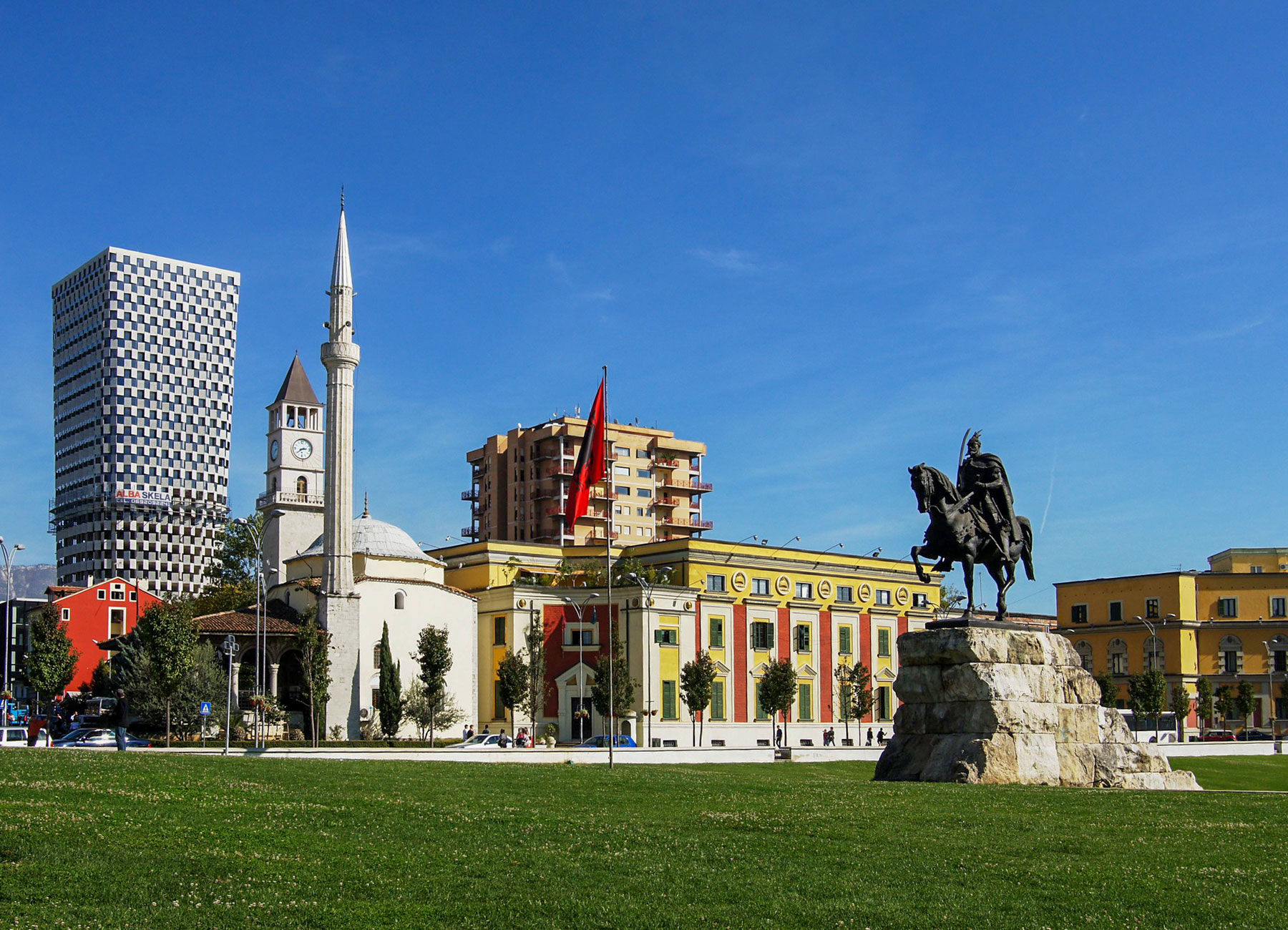 Skanderbeg Square in Tirana is the capital's main plaza, featuring (left to right) the Maritim Hotel Plaza, the Clock Tower, the Et'hem Bey Mosque with minaret, and the City Hall. The equestrian statue commemorates Skanderbeg (1405–1468), Albania's national hero for resisting Ottoman rule.
Photo: Michael Panse
Skanderbeg Square in Tirana is the capital's main plaza, featuring (left to right) the Maritim Hotel Plaza, the Clock Tower, the Et'hem Bey Mosque with minaret, and the City Hall. The equestrian statue commemorates Skanderbeg (1405–1468), Albania's national hero for resisting Ottoman rule.
Photo: Michael Panse
Capital: Tiranë (national capital)
Officially the County of Tirana, it is the political, economic, and cultural core of Albania. This fast-growing urban county in central Albania is framed by rolling hills and
Mount Dajti.
Elbasan
Capital: Elbasan
Elbasan developed at the junction of two branches of the Roman
Via Egnatia. Today, the county is a blend of industry, agriculture, and rich Roman and Ottoman heritage.
Fier
Capital: Fier
The County of Fier is situated in southern Albania along the Adriatic coast. It was home to the ancient Greek colony of
Apollonia and today combines agriculture with heavy industry, including the
Patos-Marinza Oil Field, the largest onshore oil field in Europe.
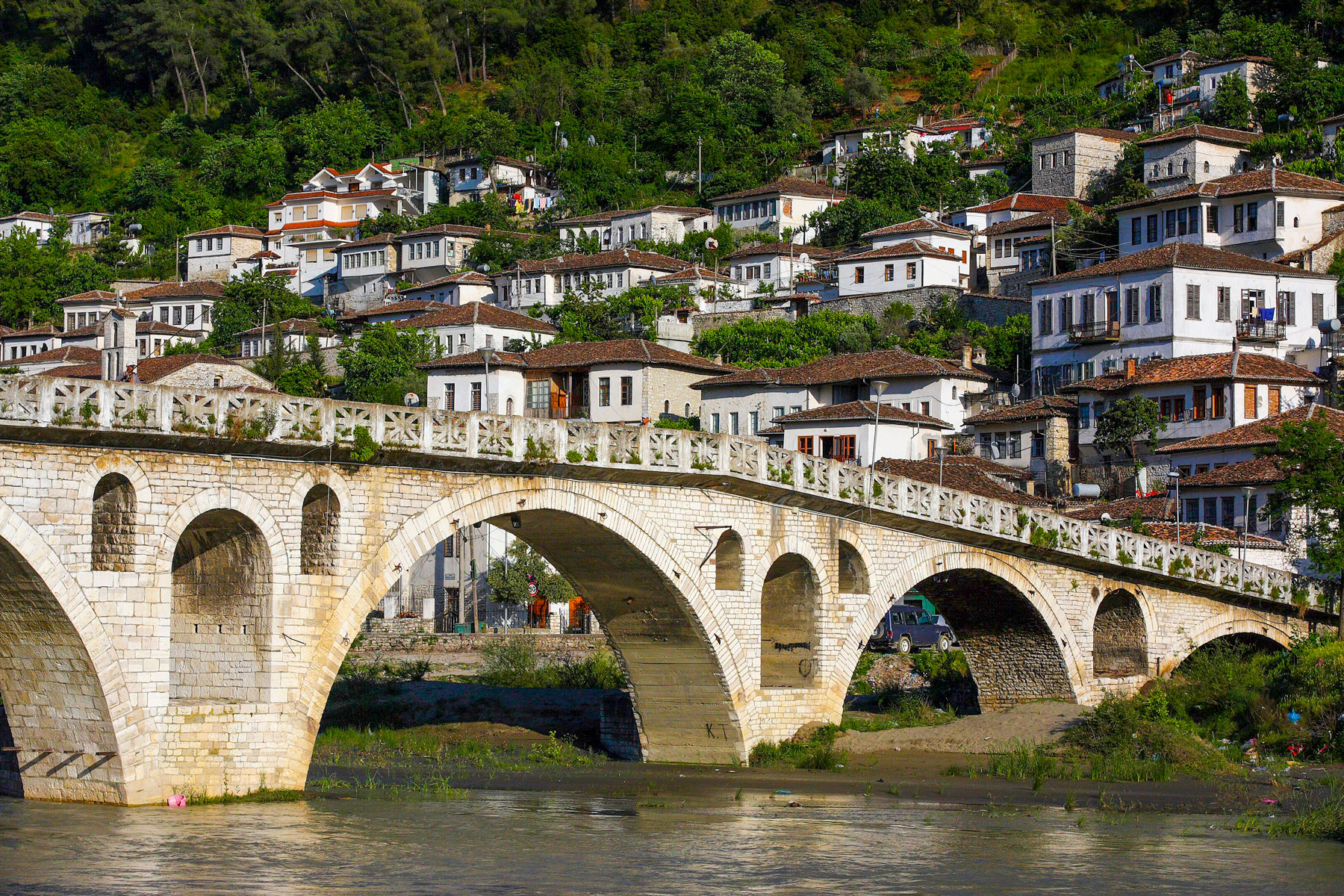
Berat
Capital: Berat
Berat lies in the heart of southern Albania and is marked by a hilly landscape and strong Ottoman heritage. Its county seat is famous for the UNESCO-listed "
Historic Centres of Berat and Gjirokastra"

and its long-settled river valleys.
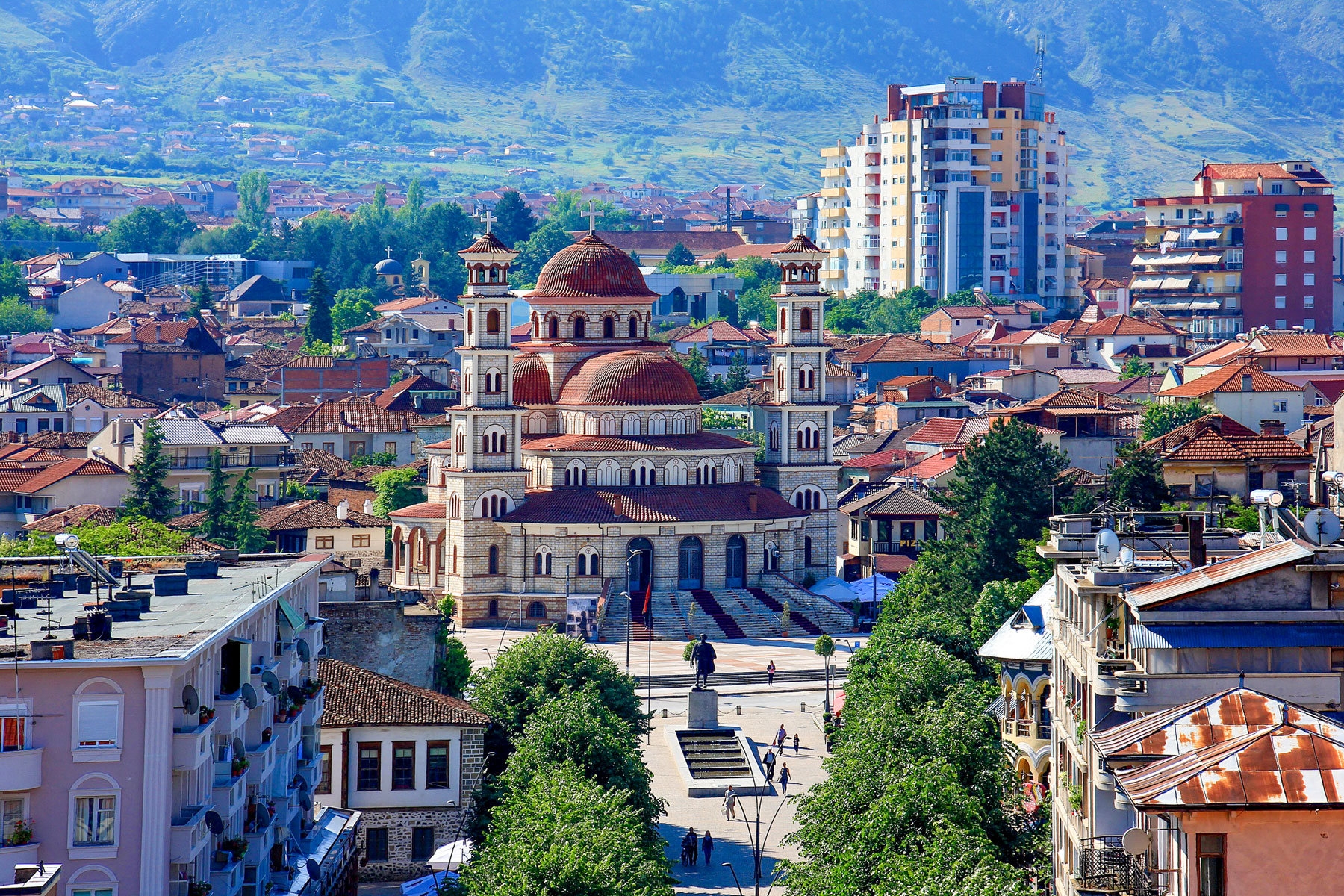
Korçë
Capital: Korçë
Situated on a high plateau near Greece and North Macedonia, Korçë County enjoys a cooler climate and strong cultural traditions. For centuries, its capital has been a major center of education and religious life for both Orthodox Christians and Muslims.
Vlorë
Capital: Vlorë
This coastal county features rugged shores along the Adriatic and Ionian Seas, the
Karaburun Peninsula, and the dramatic
Ceraunian Mountains. Vlorë played a decisive role in Albania's independence: the
Albanian Declaration of Independence was proclaimed here on 28 November 1912.
Gjirokastër
Capital: Gjirokastër
Gjirokastër is a southern mountain county shaped by history and borderland culture. Its distinctive stone architecture forms, together with Berat, the UNESCO World Heritage Site "
Historic Centres of Berat and Gjirokastra"




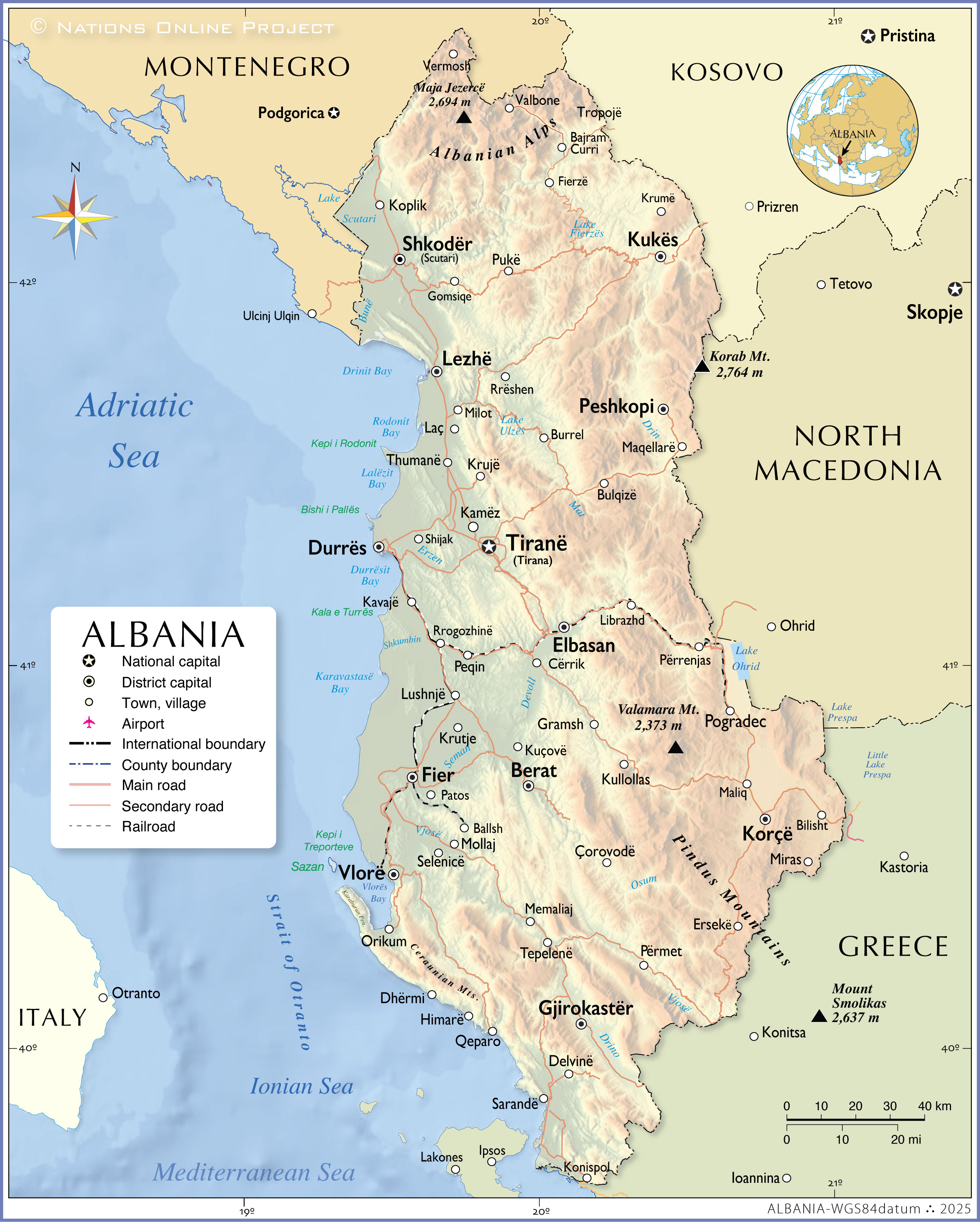
 You are free to use the above map for educational and similar purposes; if you publish it online or in print, you need to credit the Nations Online Project as the source.