The roots of the continent's name.
The origins of the names for the continents.
Continents
From Latin "continere" for "to hold together," terra continens, the "continuous
land."
Africa
A Roman term Africa terra "African land," the land of Africus, the northern
part of Africa was part of the Roman Empire. The Roman name has possibly its roots
in the Phoenician term Afryqah, meaning "colony", as transliterated into Roman Latin.
America
The name America was first used in 1507 by the Cartographer Martin Waldseemüller
in its treatise "Cosmographiae Introductio." He named the New World, after
Amerigo Vespucci, an Italian navigator who made two (or four) trips to America
with Spanish and Portuguese expeditions. It was Vespucci who first recognized
that America was a new continent, and not part of Asia.
Asia
Latin and Greek origin - the "Eastern Land," it is speculated to be from the word asu "to go out, to rise," in reference to the sun, thus "the land of the
sunrise."
Australia
Latin -
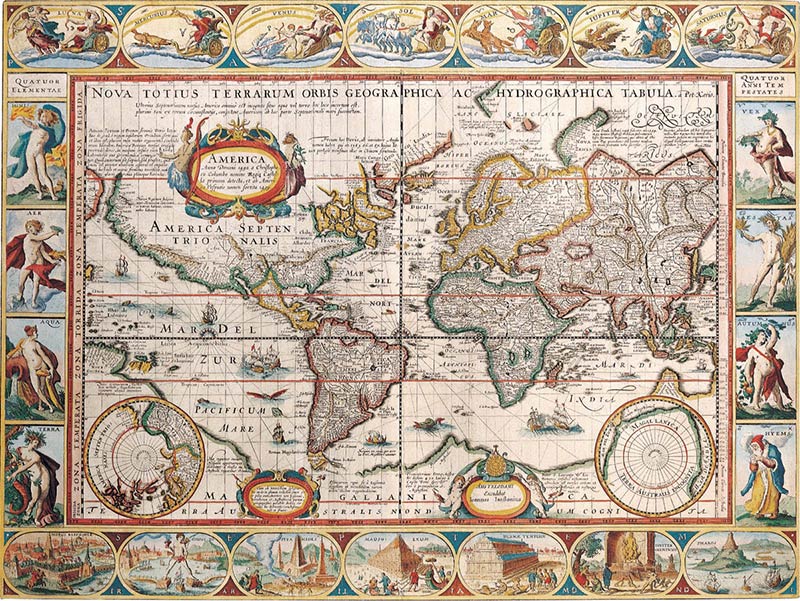
Terra Australis incognita the "Unknown Southern Land," an imaginary,
hypothetical continent, a large landmass in the south of the Indian Ocean, the
supposed counterpart of the Northern Hemisphere (see:
Map of the World by Pieter van den Keere).
Europe
Latin and Greek origin. Europa, Europe, often explained as "broad face," from
eurys "wide" and
ops "face." Some suggest a possible semantic origin by the Sumerian
term
erebu with the meaning of "darkness" and "to go down, set" (in reference
to the sun), which would parallel Orient.
Oceania
From the French Term
Océanie, the southern Pacific Islands and Australia,
conceived as a continent".
Antarctica
Old French:
antartique, in Modern Latin:
antarcticus, in Greek:
antarktikos, from
anti: "opposite" +
arktikos: "of the north."
Other Names for the Continents.
"Latin America", the term denotes the regions of the American continent where Romance languages are spoken like in
Mexico, in parts of Central and South America and the islands in the Caribbean. "Latin" is used as a designation for "people whose languages descend from Latin" especially Spanish and Portuguese; see also:
Languages of the World).
"New World" for North America.
Occident, (Europe) from the Latin term
occidentem "western sky, part of the sky
in which the sun sets."
Orient, "the East" (originally, usually meaning what is now called the Middle-East)
from the Latin term
orientem "the east part of the sky where the sun is rising."
Far East, the Eastern Hemisphere = Asia.
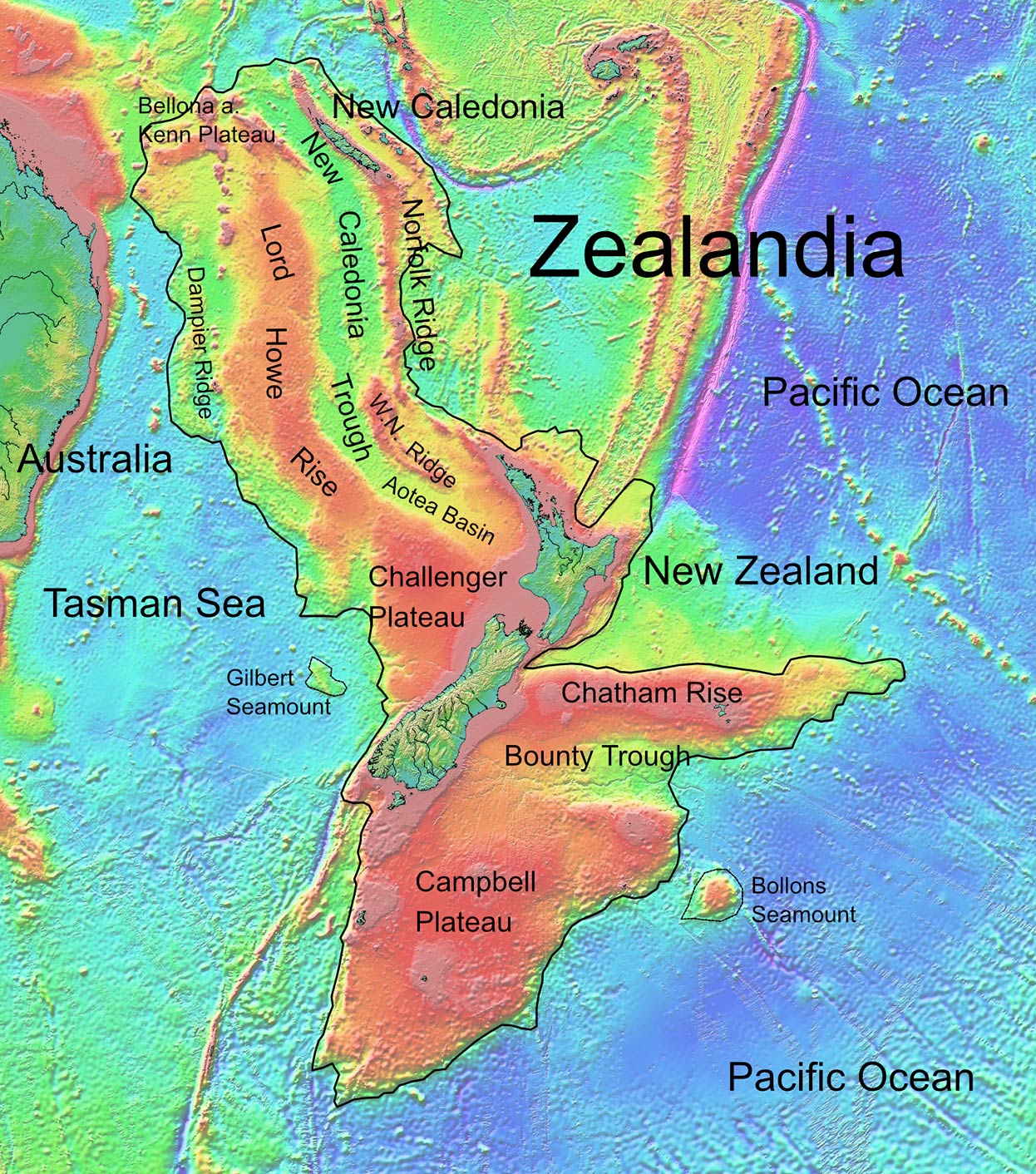
Down Under, colloq.: the term refers to
Australia and
New Zealand, or Australia alone.


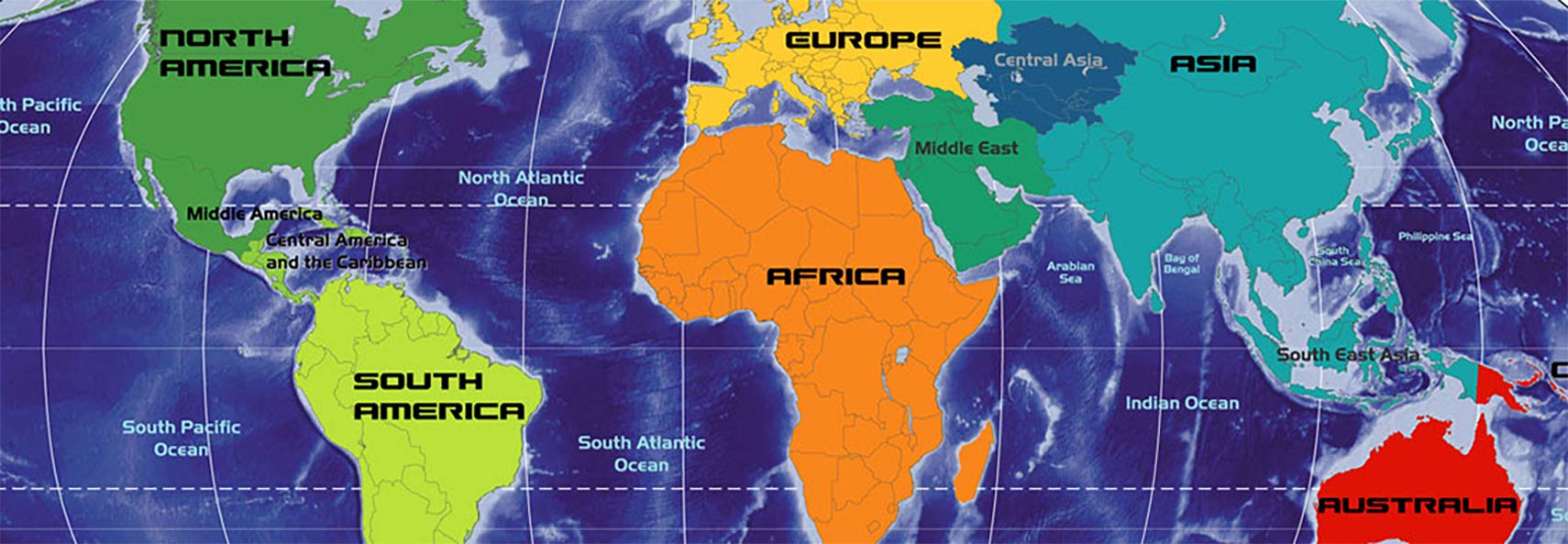








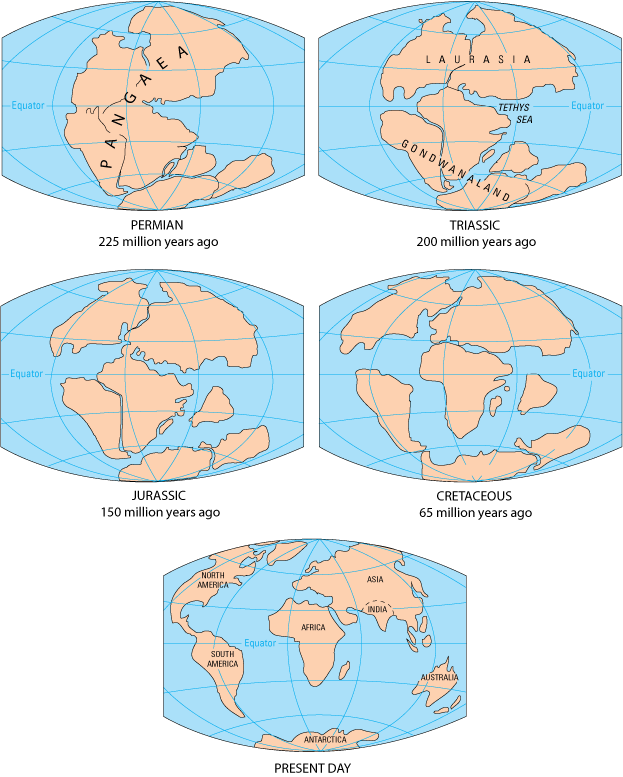
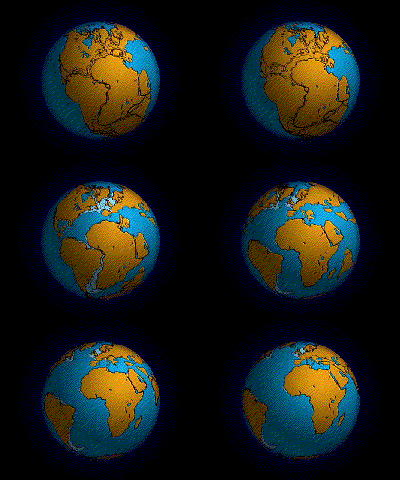
 Five continents