spacer  
Golden Chinese characters on red
Nations Online Logo
Nations Online
Countries of the World
 
 Home to Earth to Continents  Asia  Thailand / China  Chinese New Year Photos  Chinese Customs and Traditions Glossary  Five Emperors

___ Five Emperors

The Chinese Five Emperors (五帝 - wǔdì) were legendary, morally perfect sage-kings.
 

The Five Emperors were mythological rulers of China during the period from c. 2852 BCE to 2205 BCE, which is the time preceding the Xia Dynasty.
The actual translation of 帝 dì is a problematic one in that it is most often translated using its modern sense (empeor), which was unknown until after the advent of an imperial state under Qin Shi Huang (秦始皇 Qínshĭhuáng). Its original meaning, and the most likely translation thereof, is that of supreme being, rather than 'emperor'. The character 帝 originally represented a shaman wearing a liturgical mantle.

According to the Records of the Grand Historian (史記 - Shǐjì) they were:

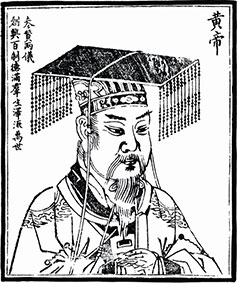
The Yellow Emperor (黄帝)
Zhuanxu (顓頊)
Emperor Ku (帝嚳)
Emperor Yao (堯)
Emperor Shun (舜)

The Song of Chu (楚辭 - chǔ cí) identifies the Five Emperors as directional gods:
Shaohao (少昊) - east
Zhuanxu (顓頊) - north
Yellow Emperor (黄帝) - center
Shennong (神農), the Emperor of the Five Grains - west
Fuxi (伏羲) - south

The Book of Rites (禮記 - Lǐjì; one of the Five Classics of the Confucian canon)
equates the Five Emperors with the Five Lineages (五氏), which comprise:
Youchao-shi (有巢氏)
Suiren-shi (燧人氏)
Fuxi (伏羲)
Nüwa (女媧)
Shennong (神農)

All these "emperors" were people with great contributions or famous rulers of tribal unions. From the 'Bamboo Annals' (竹書紀年 - Zhúshū Jìnián, a chronicle of ancient China), and the 'Classic of History' (書經 - Shūjīng, records of ancient history of China), their positions are known to have been attained by election by other chiefs in the tribal unions. When they die, their children may succeed the positions of the ruler of their own tribe, but not the position of the ruler of the tribal union. Their power is much less than the historical Chinese emperors, generally commencing with the first Emperor of China, Qin Shi Huang (秦始皇), who coined a new term for "Emperor" (huangdi 皇帝) by combining the titles of "sovereign" (huang 皇) and "god-king" (di 帝, see above), which is a homonym with the name of the "Yellow Emperor", the first traditional emperor (黄帝), who had absolute power over the people.

See also: Chinese Dynasties


Country information: China | Bhutan | Hong Kong | India | Japan | Korea | Mongolia | Nepal | Singapore | Taiwan | Tibet | Thailand | Viet Nam

More Countries in Asia
Map of Southeast Asia

Back to the index of Chinese Customs and Traditions Glossary

back       Back one page


Cities of the World
Countries of the World: A - C | D - G | H - L | M - P | Q - T | U - Z
Continents: Africa | The Americas | Asia | Australia/Oceania | Europe
The Five Emperors page was last modified on: Friday, 24-Jul-2009 18:48:17 CEST


One World - Nations Online .:. let's care for this planet
Made to improve cross-cultural understanding and global awareness.
Site Map | Information Sources | Advertise with OWNO | Disclaimer: Privacy Policy, etc.
Contact: info@nationsonline.org | Copyright © 1998-2009 :: nationsonline.org